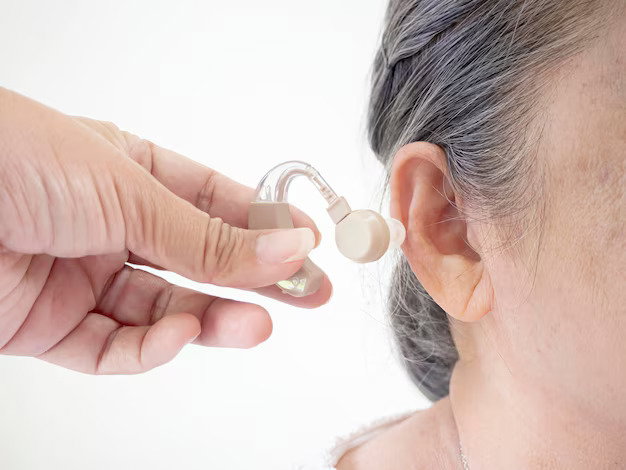
A bicros hearing aid can be a useful solution for people who have little or no usable hearing in one ear and hearing loss in the other.
Hearing clearly is not only about volume. It is also about knowing where sounds are coming from, following conversations in busy environments, and staying connected to the people around you. For people who have significant or profound hearing loss in one ear and usable hearing in the other, a bicros hearing aid can provide a practical way to improve access to sound from different directions.
Unlike traditional hearing aids designed for hearing loss in both ears, a BiCROS system is specifically designed for people whose hearing needs are different between their two ears. It can pick up sound from the poorer-hearing side and transmit it to a hearing aid worn on the better-hearing ear.
What Is a BiCROS Hearing Aid?
A bicros hearing aid is a hearing technology designed for individuals who have little or no usable hearing in one ear while the opposite ear has hearing loss that can benefit from amplification.The system generally consists of two parts:
- A microphone and transmitter worn on the poorer-hearing side.
- A hearing aid worn on the better-hearing side.
The device on the poorer side captures surrounding sounds and sends the audio wirelessly to the hearing aid on the better side. The hearing aid then combines this information with sound received on the better-hearing side.
This approach can help reduce one of the common challenges associated with hearing loss in one ear: difficulty detecting speech and sounds coming from the side with poorer hearing.
How Does a BiCROS Hearing Aid Work?
Understanding how a bicros hearing aid works can make it easier to determine whether this technology may suit your hearing needs.When someone speaks from your poorer-hearing side, the microphone on that side detects the speech. The sound is then transmitted wirelessly to the hearing device on your better-hearing ear.
Depending on the technology and settings, the system can balance the incoming signals and amplify them appropriately.The goal is not to restore hearing in the poorer ear. Instead, the system provides the better-hearing ear with access to sounds that might otherwise be difficult or impossible to detect.This can be particularly useful in situations where people frequently speak from different directions, such as family gatherings, restaurants, workplaces, classrooms, or while walking outdoors.
Who Can Benefit From a BiCROS Hearing Aid?
A bicros hearing aid may be considered when one ear has little or no usable hearing and the other ear has hearing loss that requires amplification.
A hearing professional will normally assess your hearing in both ears before recommending a BiCROS system. The assessment can help determine whether a BiCROS, CROS, conventional hearing aid, or another hearing solution is more appropriate.
People who may benefit include those who:
- Have severe or profound hearing loss in one ear.
- Have hearing loss in the better ear that can benefit from amplification.
- Frequently struggle to hear people speaking from one side.
- Find conversations difficult in group settings.
- Want better awareness of sounds arriving from their poorer-hearing side.
Because every person's hearing profile is different, professional testing and fitting are important before choosing a hearing solution.
BiCROS Hearing Aid vs CROS Hearing Aid
Although the names are similar, CROS and BiCROS hearing systems are designed for different hearing profiles.A CROS system is generally intended for someone with little or no usable hearing in one ear but normal or near-normal hearing in the other ear.
The transmitter captures sounds from the poorer-hearing side and sends them to the better ear.A BiCROS system is intended for someone with little or no usable hearing in one ear and hearing loss in the better ear. In this situation, the receiving hearing aid not only receives sounds from the poorer side but also amplifies sound for the better-hearing ear.
This distinction is important because the right technology depends on the level and type of hearing loss in each ear.
Benefits of a BiCROS Hearing Aid for Everyday Listening
One of the main advantages of a bicros hearing aid is improved access to sounds that originate from different directions.
Better awareness of sound from the poorer-hearing side
Without a CROS or BiCROS system, sounds coming from the poorer-hearing side may be difficult to detect. Transmitting those sounds to the better ear can make conversations and environmental sounds easier to notice.
More convenient conversations
In everyday situations, people do not always stand on your better-hearing side. BiCROS technology can help you access speech regardless of where another person is positioned.
Support in social environments
Restaurants, meetings and family gatherings can be challenging because several people may speak from different directions. A properly fitted BiCROS system may make it easier to stay involved in conversations.
Modern wireless connectivity
Many current hearing devices include wireless features that can connect with compatible smartphones and other devices. If connectivity is important to you, you can also explore bluetooth in ear hearing aids to understand how Bluetooth-enabled hearing technology may support calls and audio streaming.
Is a BiCROS Hearing Aid Comfortable and Discreet?
Modern hearing technology has become considerably smaller and more discreet than many older hearing devices. However, comfort depends on the individual, the style selected, ear anatomy, hearing requirements and how the devices are fitted.
If discreet hearing technology is your priority, you may also want to learn about the best invisible hearing aid options available for different types of hearing loss.It is important to remember that the smallest hearing aid is not necessarily the best choice for every person. Hearing performance, battery requirements, connectivity, ease of handling and the degree of hearing loss should all be considered alongside appearance.
Choosing the Right BiCROS Hearing Aid
Choosing a bicros hearing aid should begin with a comprehensive hearing evaluation rather than simply selecting a device based on its features.A hearing professional can consider factors such as:
- Your hearing levels in each ear.
- Speech understanding.
- Lifestyle and communication needs.
- The environments where you have the most difficulty hearing.
- Smartphone and Bluetooth requirements.
- Comfort and device handling.
- Your personal preferences regarding size and appearance.
The fitting process is also important. A hearing professional can adjust the balance between sounds picked up by the transmitter and sounds received naturally or through amplification by the better-hearing ear.
What to Expect During a BiCROS Hearing Aid Fitting
A professional fitting usually involves more than putting the devices on your ears. Your hearing results, listening preferences and everyday communication challenges can all influence the programming.You may also need some time to become accustomed to hearing sounds differently.
During this adjustment period, feedback from you can help your hearing professional fine-tune the settings.
Follow-up appointments can be useful for addressing comfort, sound quality, volume preferences and performance in different listening environments.If you are considering hearing technology and want professional guidance, visiting a trusted hearing aids center can help you understand which options are appropriate for your specific hearing profile.
Conclusion: Could a BiCROS Hearing Aid Improve Your Listening Experience?
A bicros hearing aid can be a useful solution for people who have little or no usable hearing in one ear and hearing loss in the other. By capturing sounds from the poorer-hearing side and transmitting them to a hearing aid on the better-hearing side, the technology can provide greater access to sounds coming from different directions.
The right hearing solution depends on your individual hearing test results, lifestyle and communication needs. If conversations from one side are regularly difficult, consider speaking with a hearing professional about whether a BiCROS system could be appropriate for you.